
Bangladesh Rooftop Solar Incentive: Understanding Export Payments, Storage and Electricity Costs
The value of rooftop solar depends on more than a payment rate. Policy eligibility, when electricity is used, and how storage is configured all influence the outcome for electricity users.

What the September announcement covers
BSS reports that an energy ministry incentive took effect on 1 September 2026 for rooftop solar with battery storage under the Net Metering Guideline 2025. The reported terms are summarised below. Read the BSS announcement report.
- Export payment
- Tk 10.50 per kWh of qualifying surplus electricity supplied to the grid.
- Installation deadline
- 28 February 2027.
- Payment end date
- 28 February 2030 for eligible projects.
- Equipment standards
- Panels, batteries, inverters and meters must satisfy BSTI and SREDA technical requirements.
- Metering and payment
- The distribution company records supplied electricity. Payments go to bank or mobile financial accounts.
The installation and payment dates serve different purposes. The common payment end date does not promise every project the same number of payment years.
Bill savings and export income are different
Solar electricity used on site can replace electricity that would otherwise be purchased from the grid. Electricity exported is a separate part of the energy balance. Treating every unit generated as both a bill saving and an export sale would count the same benefit twice.
The 2025 guideline provides the underlying net-metering framework: import and export readings are accounted for in billing, unused credits carry forward within a quarter, and remaining credits are settled at quarter-end. It also assigns 10% of net exported electricity in each billing period to distribution-system maintenance, with 90% credited to the consumer. Fixed charges still apply. SREDA guideline, sections 3.4–3.5.
These existing rules and the September incentive should be considered separately. The local utility must confirm which exported units qualify for the incentive and how the payment interacts with the project’s bill. Multiplying total annual solar generation by the advertised export rate is therefore not a sufficient financial assessment.
Electricity-use patterns shape the result
Two sites with a similar annual electricity bill may use power at very different times. A site with substantial daytime demand may consume more solar generation directly. A site whose essential equipment runs later in the day needs a closer assessment of storage capacity, charging opportunities and remaining grid purchases.
A useful estimate separates solar generation, direct consumption, battery charging and grid exports. Equipment operating hours and recent electricity bills provide a starting point. Seasonal changes in demand and solar output should also be reflected in the assumptions, rather than presenting a single favourable month as a typical year.
Storage and continuity of supply
A battery can shift energy to a later period, but it does not by itself establish that every connected load will remain powered during a grid outage. Backup operation depends on the inverter, storage arrangement, protection and system configuration. The US Department of Energy explains that solar panels need a suitably configured inverter and storage to provide power independently of the grid. Solar and Resilience Basics.
For the electricity user, the relevant questions are which equipment can remain in service, for how long under stated conditions, and what happens as the battery approaches its operating limit. Those operating requirements should be established alongside the expected electricity savings.
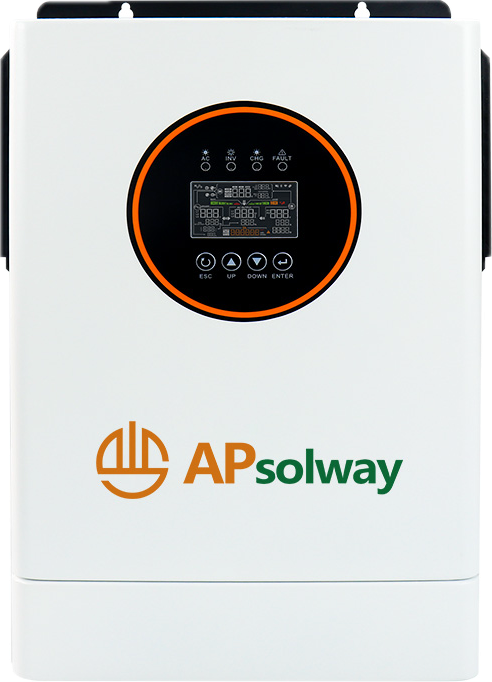
APSolway’s approach is to begin with actual electricity needs, then relate inverter selection to the load profile, installation environment and supply objectives. The installation team must confirm model suitability and local project requirements.
Timing and costs beyond installation
The net-metering guideline requires an eligible utility customer, settlement of outstanding arrears before applying, and ownership of the installation site or the owner’s legal permission. Project capacity and connection arrangements must also comply with the guideline. SREDA guideline, sections 3.1–3.3.
Equipment delivery is one step in a longer process that includes utility permission, installation, inspection, commissioning and the net-metering agreement. Roof readiness, equipment availability and these procedures all affect implementation timing. SREDA guideline, section 3.7.
A longer-term assessment should include installation and maintenance costs, expected battery replacement and the assumptions used after the incentive ends. This makes the relationship between policy support, everyday electricity use and ongoing system costs clearer.